Let's be honest: eloping sounds simple until you actually try to plan it. You Google "how to elope in Colorado" and suddenly you're drowning in permit applications, altitude warnings, and a dozen competing blog posts telling you to book Rocky Mountain National Park two years in advance. We get it — we photograph elopements all over Colorado, and we've watched a lot of couples nearly talk themselves out of a beautiful, intimate wedding because the logistics felt overwhelming.
They weren't. And yours don't have to be either.
This is the practical guide we wish existed when couples first reach out to us — covering permits, locations, timing, and the small details that make the difference between a ceremony that feels alive and one that feels like a rushed photo shoot.
Eloping isn't running away from something. It's running toward each other — intentionally, without the noise.
Step One: Nail Down Your Location First
Everything else — your date, your attire, your photographer — flows from where you choose to get married. Colorado has no shortage of stunning terrain, but each type of location comes with different logistics.
National Parks & Federal Land
Rocky Mountain National Park, Black Canyon of the Gunnison, Great Sand Dunes — these are iconic for a reason. RMNP in particular has locations that will genuinely make your jaw drop. The catch: you need a Special Use Permit, fees range from $150–$500 depending on group size, and peak summer months book out months in advance. Apply through recreation.gov and give yourself at least 6 months of runway if you want a summer date.
The upside: National Parks are some of the most protected, pristine landscapes in the country. Worth the extra planning.
National Forests & BLM Land
This is where Colorado really shines for elopements. National Forest land — Arapaho, Roosevelt, White River, Pike — covers millions of acres and generally allows ceremonies without a special permit for small groups (typically under 75 people). You can be married on a ridge overlooking a valley with no one else in sight for free, legally, tomorrow if you wanted.
We do a lot of elopements on National Forest land around Bailey, Breckenridge, Leadville, and Steamboat. Less paperwork, more adventure.
State Parks
Colorado State Parks (Chautauqua, Roxborough, Eldorado Canyon, Golden Gate Canyon, etc.) require a ceremony permit — usually $25–$75 — applied for through the individual park. Turnaround is much faster than federal permits, often just a few weeks.
National Parks
$150–$500 · Apply 4–6 months out · recreation.gov
National Forest / BLM
Often free for small groups · Check with the specific ranger district
State Parks
$25–$75 · 2–4 weeks lead time · Through individual park office
Private Land
Ranches, retreats, working farms — often the most flexible option
Step Two: Understand Colorado's Weather
Colorado weather is not like anywhere else. This is not an exaggeration. Afternoon thunderstorms in July and August are nearly a daily event above treeline — the kind that build from nothing and produce lightning within 20 minutes. We've had to move ceremonies and hustle couples off exposed ridges more than once.
That said: Colorado weather is also the best light source we've ever worked with. A storm clearing over the mountains, golden hour on a snow-covered peak, the low-angle winter sun cutting across a meadow — if you're willing to work with the weather instead of fighting it, you'll get images that look impossible.
Plan your ceremony for mid-morning
In summer, aim for 9–11am. You beat the afternoon storms, the light is soft and directional, and the trails are quieter. Golden hour (1–2 hours before sunset) is a beautiful option too — storms usually clear by evening in summer.
Build in a weather backup
Not a cancelled date — just a plan B location. If your dream spot is above 12,000 ft, identify a lower-elevation alternative that's still beautiful. We help every couple we work with map this out before the day.
Don't sleep on winter elopements
October through March is our most underrated season. Permit wait times drop dramatically, the landscapes are otherworldly, and the intimacy of a snow-covered ceremony hits differently. Dress in layers, bring hand warmers for the photographer (we'll love you for it), and go for it.

Step Three: Sort Your Legal Paperwork (It's Simple)
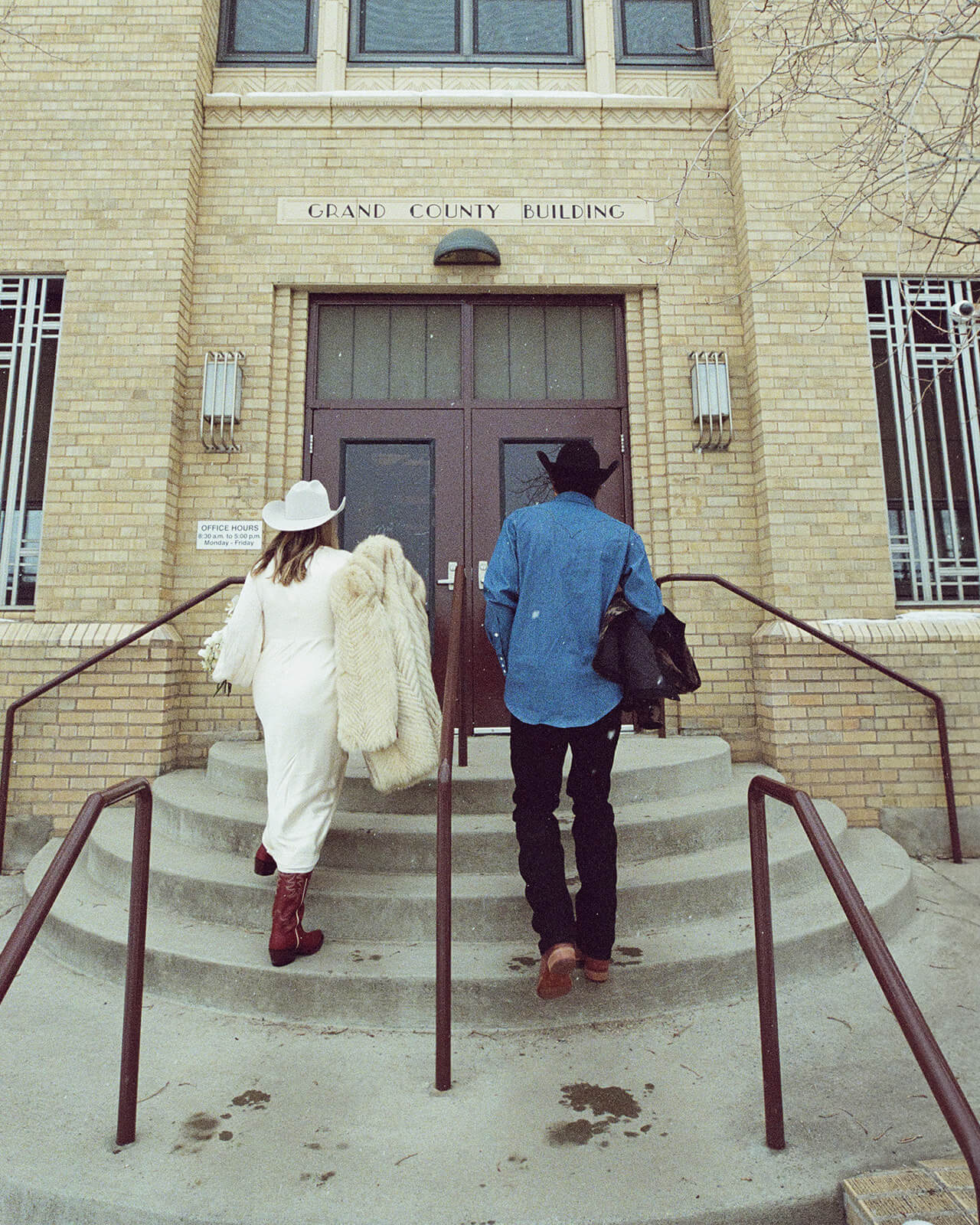
This is the part that scares people the most and is actually the easiest. Colorado is a self-solemnizing state — meaning you don't legally need an officiant to get married. You and your partner can declare your own marriage, sign the license together, and that's it. You are married.
Here's the actual process:
Get your marriage license
Apply at any Colorado county clerk's office. You both need to appear in person with valid ID. The fee is around $30. The license is valid for 35 days statewide — no waiting period, no residency requirement. You can literally get it the morning of your elopement.
Sign your license after the ceremony
You and your partner sign the license. If you have a witness (optional in Colorado), they sign too. If you chose an officiant, they sign here.
Return the signed license within 35 days
Mail or return it to the county clerk who issued it. They record it and mail you a certified copy. Done. You're legally married.
"Two are better than one, because they have a good return for their labor: if either of them falls down, one can help the other up."
Ecclesiastes 4:9–10Step Four: Think About What You Actually Want to Feel
This sounds softer than the logistics sections, but it matters more. Before you book anything, sit together and ask: what do we want to feel on this day? Not what do we want the photos to look like — what do we want to feel?
Some couples want to feel wild and untethered — hiking to a summit with a pack on their back and their vows in their pocket. Others want to feel romantic and slow — a quiet meadow, a long morning, coffee and ceremony. Others want to feel anchored in something bigger than themselves — a meaningful place, a reading from scripture, a moment of prayer before they say the words.
There's no wrong answer. But knowing this shapes every decision that follows — your location, your timing, your attire, who (if anyone) you invite, and what kind of photographer you need beside you.
We're not just there to document. We show up as witnesses to something sacred, and we work best when couples know what they came for. Tell us everything.
Step Five: What to Wear (and What Not to Stress About)
Wear whatever makes you feel like yourself — elevated. That's genuinely the best elopement attire advice we can give.
For mountain terrain: think about footwear first. A flowy dress on a mountain summit looks stunning. Heels on a rocky trail is a different story. Brides often go with hiking boots they've broken in, swap to dress shoes for the ceremony itself, then back to boots for the adventure portraits. It works perfectly.
Grooms: a tailored suit jacket over a flannel feels very Colorado and photographs beautifully. Don't overthink it. If you'd normally wear it somewhere special, it's right.
And bring layers. Colorado mornings at elevation are cold even in July. You can always take layers off for photos — but you can't add warmth you didn't bring.
One Last Thing
The couples we photograph who say they have zero regrets about eloping all share one thing in common: they planned the day around their relationship, not around anyone else's expectations. They chose a location that meant something to them. They wore what made them feel alive. They said vows they actually wrote. And they gave themselves time — not two rushed hours, but a full day to move slowly through something they'll never get back.
That kind of day doesn't happen by accident. It gets built intentionally, with people around you who understand what you're trying to create.
If that sounds like what you're after, we'd love to hear from you. We're based in Bailey, Colorado — right in the heart of the terrain we love most — and we travel wherever the adventure goes.